Dry Cupping as effective method for scar tissue management
The skin is a protective barrier of the body against external factors, and its damage leads to a loss of integrity. Scars are formed as an effect of damaging the skin. They affect most people on earth. Scars arise as a result of mechanical damages, burns, surgical procedures, chemical or biological agents, and long-lasting skin diseases. The optimal result of wound healing is a mature, well healed scar. Normal wound healing results in a correct, flat, bright, and flexible scar. Normal scars do not go beyond the original area of damage and are aesthetically satisfactory. Among the factors increasing the risk of pathological scarring, we can distinguish: age, anatomic location, race, and type of trauma. An important problem in the wound healing process is the formation of pathological scars, such as hypertrophic scars, keloids, and atrophic scars. The keloids and hypertrophic scars incidence is determined at the level of 4.5%–16%, Pathologic scar formation manifests itself by low tensile strength, pigment alterations, increased tension texture, and sensation irregularities. Abnormal scars arising as a result of disorders in the process of fibrosis raised above the surface of the skin, beyond the original area of damage. Often abnormal scars are accompanied by pain, itching, and contractures. Initial skin damage and patient specific factors in wound healing cause that many of these scars may progress into widespread or pathologic hypertrophic and keloid scars. Any dysfunction in the wound healing process may result in excessive scar tissue formation. Despite the continual advancement or surgical care, patients who have undergone surgical interventions are often left with scars, persistent functional impairments, and symptomology.
The scar tissue management is often a neglected element of postoperative physiotherapy. Patients often do not correlate their pain and mobility restrictions with scar tissue. Early treatment can prevent hypertrophy of the scar reduce discomfort and ailments and learn proper skin care.
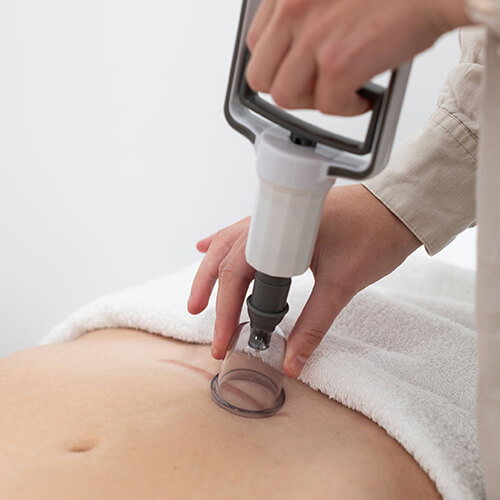
Dry cupping is a supporting method used in scar treatment. Subatmospheric pressure suction affected by cup, promote peripheral blood circulation, and improve tissue elasticity. Dry cupping can be used with caution only in the remodeling phase of the wound healing and in old scars treatment. The reported effect of cupping therapy includes modification of the skin's biomechanical properties and improving local anaerobic metabolism. However, too high pressure can induce microtraumatic injures and triggers new inflammatory phases. Especially in the early phase, it can quickly lead to an overdose.