Kinesiotaping in treating chronic lateral epicondylitis (tennis elbow)
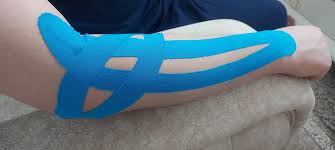
Lateral epicondylitis is commonly observed in active individuals in daily life. Naturally, restriction of hand function is an undesirable situation in these patients. Although static wrist splints are frequently used and effectively used and effective in the treatment of UE, they often cause difficulties in terms of patient compliance . Unlike rigid splints, KT offers the an extra benefit of not restricting movement, which may contribute to better patient outcomes by allowing for more natural, pain-free motion during daily activities. This movement-friendly aspect of KT may be particularly advantageous in maintaining functional mobility and enhancing the overall rehabilitation process. Although local steroid injections can be quite effective, they are not considered a first-line treatment option. They also carry risks of side effects and are unlikely to provide a full recovery unless accompanied by rest/splinting activity modification and exercise.
For the muscle inhibition technique, a Y-strip of approximately 30 cm in length was prepared according to the length of the patient’s forearm. Kinesio tape application was initiated distally from the insertion point (EBD) of the muscles towards their origin (common extensors). The distal end of the Y-strip was attached without tension, starting at the dorsolateral side of the hand, with the separation point of the Y-strip positioned at the base of the first three metacarpals. With the elbow in extension, the wrist in flexion, and slight ulnar deviation, the medial and lateral tails of the Y-strip were applied with slight tension (15–25%) up to 4–5 cm proximal to the lateral epicondyle of the humerus . Thus, the lateral epicondyle was positioned between the two tails of the Y-strip. Following the general KT procedure, the proximal anchor, like the distal one, was applied without tension. Subsequently, the EDF technique was applied to utilize its pain-relieving, anti-edema, and superficial and lymphatic circulation-promoting properties. For this purpose, two I-strips, each approximately 6–8 cm in length, were prepared. This I-strip was cut into 6–7 pieces to create a web-cut tape. The two web-cut tapes were applied radially with a very light stretch of less than 10%, ensuring that the therapeutic target area remained centered and that the tapes intersected each other.
Kinesiotaping when combined with activity modification and an individualized home-based exercise program, is highly effective and satisfactory in improving pain, functional status, and quality of life in treating chronic UE. Strengthening the evidence supporting the efficacy of KT, a preferred treatment option due to its patient comfort and non-restrictive nature on hand function.